Taken from http://www.skillset.org/film/business/index.html. Click to view in more detail.

Showing posts with label film. Show all posts
Showing posts with label film. Show all posts
Tuesday, 25 September 2012
Stages of Filmmaking
Taken from http://www.skillset.org/film/business/index.html. Click to view in more detail.

Wednesday, 12 September 2012
Selected Key Terms for Institutions and Audiences - The Film Industry
Selected Key Terms for Institutions and Audience
Definition: any company or organisation that produces, distributes or exhibits films. The BBC makes films with their BBC Films arm; Channel4's Film Four produces films, Working Title also produce films, as does Vertigo Films, etc. Some institutions need to join with other institutions which distribute films. Vertigo Films is able to distribute its own films, Channel Four distributed Slumdog Millionaire through Pathe. Working Title's distribution partner is Universal, a huge US company which can make, distribute and show films. The type of owner ship within an institution matters as, for instance, Channel 4 and the BBC are able to show their own films at an earlier stage than other films made by other institutions. They are also better placed to cross-promote their in-house films within their media organisations. Use you work on Film Four as the basis for most of what you write, Moon is a good cross comparison as Duncan Jones had to create his own institution just to get the film made.
Distribution and Marketing
Definition: the business of getting films to their audiences by booking them for runs into cinemas and taking them there in vans or through digital downloads; distributors also create the marketing campaign for films producing posters, trailers, websites, organise free previews, press packs, television interviews with the "talent", sign contracts for promotions, competitions, etc. Distributors use their know-how and size to ensure that DVDs of the film end up in stores and on supermarket shelves. Distributors also obtain the BBFC certificate, and try to get films released as the most favourable times of the year for their genre, etc.
Examples: Universal distributed Working Title's The Boat That Rocked; Pathe distributedFilm4 and Celadors' Slumdog Millionaire after the original US distributor, Warner Independent went out of business. TRON was heavily marketed across a variety of mediums, Moon struggled to get press attention and Duncan Jones had to really push the film in obscure places like Popular Mechanics etc. The Kings Speech was distributed by Momentum (a susiduary of Aliance films) who are a major independent film distributor.
Exhibition
Definition: showing films in cinemas or on DVD. Media attention through opening nights and premieres How the audience can see the film: in cinemas, at home, on DVD, through downloads, through television, including premieres, the box office take in the opening weeks; audience reviews which includes those of the film critics, ordinary people, cinemas runs; awards in festivals, The Oscars, BAFTAS, etc.
Examples: Slumdog Millionaire almost never got distribution. Its early US distributor, Warner Independent was a victim of the economic downturn and went out of business. The film's makers then struggled to find a distributor! Then Fox Searchlight stepped up and "the rest is history". The 8 out of 10 Oscar nomination wins ensured that the film has been the greatest British success in awards and in box office for nearly 60years.
http://www.independent.co.uk/arts-entertainment/films/news/boyle-reveals-slumdog-millionaire-was-nearly-never-made-1331821.html
Motherhood took just £86!
Moon. Initially Sony Pictures Worldwide were due to distribute the film but they specialise in straight to DVD features. Following positive reaction following its Sundance film festival the rights were acquired by Sony Classic Pictures who gave the film a limited release in the US in Cities like New York and LA.
Exchange
Definition: The unintended use of an institution’s media text (i.e. a film) by OTHER PEOPLE who use the film or parts of it to form new texts. What happens to a film, etc. after the public get their hands on it using digital technology.

Examples: People unconnected to the institution/ film using WEB 2.0 applications such as YOUTUBE, Blogger, Amazon film message boards, TWITTER, Face-Book, discuss the film or edit parts of together to form a new text which the may then put a new soundtrack to and publish on YOUTUBE, etc. When you add a trailer from a site like YouTube on your blog you have been engaging with exchange. Look back to MArk Kermodes video regarding piracy and the new release strategies for films like Ken Loach's "Route Irish" (Loach has reportedly steeled himself for a frosty response from critics and anticipates an underwhelming box office, noting the difficulty he faced securing a distribution deal. Though pragmatic in his view that “people don’t make films to communicate; they make it as a commodity”,an unorthodox release strategy utilising Sky Movies Premier - which will place the film (and by extension, its subject matter) in a wider public sphere than it might otherwise have reached – suggests he hasn’t given up on pedagogy entirely.) or the Jack Ass 3 release on DVD and Sky Box Office.
Vertical and Horizontal Integration
Definition: Absorption into a single firm of several firms involved in all aspects of a product's manufacture from raw materials to distribution.
Example: Vivendi Universal have integrated film, music, web and distribution technology into the company, including owning big stakes in cables and wires that deliver these services. Therefore they are vertically integrated because they own all the different companies involved in film, from production to distribution to exhibition. They are also horizontally integrated because they have all the expertise for producing media content under one roof – films, TV, magazines, books, music, games thus being able to produce all the related media content for one film under the same roof (see synergy). This is important for the control the institution has over their product/film.
Synergy/Synergies
Definition: The interaction of two or more agents (institutions/companies) to ensure a larger effect than if they acted independently. This is beneficial for each company through efficiencies in expertise and costs.


Examples: Working Title know how to make films and they have formed a business partnership with Universal, a massive US company, who have the experience and size in the marketplace (cinemas, stores, online, etc.) to distribute them. (They create the marketing campaign to target audiences through posters, trailers, create the film’s website, free previews, television and press interviews featuring “the talent”, drum up press reviews, word of mouth, and determine when a film is released for the best possible audience and the type of release: limited, wide, etc.) Channel Four’s Film 4 and Celador Films(Celador also produce Who Wants to Be A Millionaire and films, too) benefited by pooling their know-how, experience and expertise to jointly produce Slumdog Millionaire. These companies formed a business relationship with France’s Pathe to distribute this film. In the UK Pathe helped create the poster, trailer, website, etc. In the USA the film found another distributor after being nominated for the Oscars.
Viral Marketing
Definition: A marketing technique aiming at reproducing "word of mouth" usually on the internet and through existing social networks. YouTube Video pastiches, trailers, interviews with cast members, the director, writer, etc. You can find interviews of “the talent” trying to gain publicity for your case study films on YouTube. Find some clips from the films we have studied to help you in the exam.
Guerilla Marketing
Definition: The use of unconventional and low cost marketing strategies to raise awareness of a product. The aim is usually to create “buzz” and “word of mouth” around a film. Unusual stunts to gain publicity (P.R.) on the film’s opening weekend, etc.
Examples: Sasha Baron Cohen created “buzz” before the release of his film “Borat” by holding fake press conferences. The studio also accessed the popularity of YouTube by releasing the first 4 minutes of the movie on YouTube, a week before it’s release, which can then be sent virally across the nation. At a special viewing of “Bruno” Cohen landed on Eminem “butt first” from the roof MTV Awards venue, dressed in as an angel outfit with rents in the rear end.
Media Convergence
Definition 1: Convergence of media occurs when multiple products come together to form one product with the advantages of all of them.

Examples: More and more films are being marketed on the Internet and on mobile phones. You no longer need even to buy the DVDs or CDs as you can download films and music directly to your laptop, Mac or PC. Blue Ray DVDs can carry more features than ordinary DVDs and can be played on HD televisions and in home cinemas for enhanced/cinematic picture quality. You can save films on SKY digital, Free-box digital players, etc. You mobile phone has multiple features and applications. With media and technological convergence this is growing year on year. Play-Stations, X-Boxes and the Wii can can connect with the Internet and you can play video games with multiple players.
Technological Convergence
Definition 2: The growing interractive use of digital technology in the film industry and media which enables people to share, consume and produce media that was difficult or impossible just a few years earlier.
Examples: For instance, the use of new software to add special effects in editing; the use of blue-screen; using new types of digital cameras like the one Danny Boyle used in “Slumdog Millionaire” (The Silicon Imaging Camera to shoot high quality film in tight spaces); you can use the Internet to download a film rather than go see it in the cinema; you can watch it on YouTube; you can use special editing programs like Final Cut Pro to edit bits of a film, give it new soundtrack and upload it on YouTube; you can produce illegal, pirate copies on DVDs from downloads and by converting the film’s format; you can buy Blue Ray DVDs with greater compression which allows superior viewing and more features on the DVD; distributors can use digital software to create high concept posters; cinemas can download films to their projection screens and do not have to depend on a van dropping off the film! The is also the Digital Screen Network. There are tons of ways in which technological convergence affects the production, distribution, exhibition and exchange by prosumers. ( A prosumer is someone who not only consumes (watches films) but also writes about them the Net, blogs and make films out of them, often uploading them on sites like YouTube, etc.
A Mainstream Film
Definition: A high budget film that would appeal to most segments of an audience: the young, boys, girls, teenagers, young people, the middle aged, older people, the various classes in society. Distributors often spend as much or more than the film cost to make when distributing mainstream films that are given wide or universal releases.
Example: The Boat That Rocked was a mainstream idea and was given the mainstream treatment on wide release. The film flopped at the UK box office on release ( and has not done too well since mid November 2009 on release in the USA. This was mostly because of its poor reviews, particularly from “Time-Out”. However, when young and older audiences see the DVD they generally like the film because of its uplifting storyline and the well-chosen soundtrack.
Art House Films
Definition: A low budget independent film that would mostly appeal to an educated, higher class audience who follow unusual genres or like cult directors that few people have heard of. Therefore it is usually aimed at a niche market. Foreign films often come under this category.
Examples: The low budget film, Once (2007) which found a specialised, boutique distributor in Fox Searchlight fits this label. (FOX the mainstream company usually distributes big budget film and blockbusters); So does “Juno” from 2008 which began as a low budget film about teenage pregnancy that the big studios thought too risky to touch – but it found popularity through its touching storyline, engaging music and its Oscar nomination for best script. Like “Slumdog Millionaire” the film crossed over between art-house cinemas and audiences to mainstream ones because of the recognition it received from Canadian film festivals and award ceremonies like Britain’s BAFTAS and the Hollywood’s Oscars.

Ratings bodies BBFC - The British Board of Film Classification
How your institutions films are rated will affect audiences in so far as WHO can see them. Remember that sex scenes, offensive language, excessive violence, the use of profanity, etc. can affect the rating and certificate the film receives and therefore affect who is able to see the film.
Sunday, 2 September 2012
Film Analysis
During the summer, I went to see 'The Amazing Spider-Man', 'The Dark Knight Rises' and 'Brave'.
 After enjoying the other Spider-Man films, I was curious as to whether the remake would be better/worse/etc. and how they were going to make the new story different.
I saw the trailer for the film on TV, which gave the impression that it was not to be missed.
Also, I realised that some of my favourite actors starred in the movie, and decided that I had to give it a shot.
 I went to see 'The Dark Knight Rises' after my friends had invited me to a trip to the cinema and decided to join them, but I'd already seen the trailer on TV and thought that it'd looked pretty good, anyway, as I enjoy action films in general.
Having not seen any of the other Batman films, I was a bit anxious as to whether I would be able to see 'The Dark Knight Rises' without getting confused, however.
I needn't have worried, though, as I understood most of it perfectly well and found the film very enjoyable.
I have no other portrayal to go on, but I felt that Christian Bale's performance as Batman was extremely refreshing and he seemed to be perfect for the role.
A new addition to the Batman legend was Catwoman, played by Anne Hathaway, and I thought that there was no one better for this role, either.
The storyline focused around Bane, Batman's nemesis throughout the film, and how he came to be. There was a slight twist at the end, also, concerning his mother, which I felt was very well thought out and unexpected.
8 years since Batman vanished into the night, after taking the blame for the death of D.A. Harvey Dent, Bruce decides that he must reunite Batman with the world, as the masked terrorist, Bane, must be stopped before he destroys Gotham City once and for all. Selina Kyle (Catwoman) is up to something mysterious, too, and needs to be put into place, also.
I was a little confused as to why Batman decided to take the fall for this 'Harvey Dent' character, as I hadn't seen the previous film, but this was down to my ignorance and not the film makers themselves, and so I cannot fault the epic conclusion to the Batman trilogy that is 'The Dark Knight Rises'.
There was plenty of amazing action scenes and everything was very dramatic and thrilling, which had you constantly on the edge of your seat, but, to my surprise, there was a romantic side to film, also, much like Spider-Man.
The movie includes everything you could possibly want to see!

As a lover of Disney, as soon as I was made aware that 'Brave' was coming out, I knew that I had to go and see it.
The story is set in the heart of Scotland, and the main character, Merida, is a fiery red-head with an even stronger personality. Because of this, I thought 'Brave' looked a bit different to most of Disney's previous films, but I knew that it would still have a magical quality to it, and so I went to check it out!
The story is based around the idea that you can 'change your fate', that nothing is ever fixed and you can be whoever you want to be, which I thought was very refreshing and inspiring.
Merida is the daughter of the King and Queen of Scotland and is told that she must marry very soon, so as to rule the kingdom properly, after her mother informs her of a legend about a prince who let his own kingdom go to waste.
But Merida doesn't want to marry someone she is not in love with and will not be forced into anything. Instead, she likes to spend her days riding through the forest on her horse with her bow and arrow, whilst ignoring all of her responsibilities.
She is not the type of princess Disney has previously shown in their other films, and I especially liked this about her.
Cleverly, but also stubbornly, she decides to compete for her own hand, and then an argument between her and her mother ends in a tear in the family tapestry, as well as their relationship.
She flees into the forest and stumbles upon a witch, who's magic ends up almost breaking her family down, instead of only changing her mother's mind, like she'd intended.
After many obstacles are thrown their way, including numerous grizzly bears and overcoming a strong sense of pride, Merida and her family finally see eye to eye and all is well in the kingdom.
'Brave' is an extremely heart-warming story, original in its content, but exactly what you would expect from Disney's marvelous film makers, all the while.
I loved the twist it brought to the classic fairy-tale stories already out there, and I think people of all ages would enjoy this brilliant tale.
 After enjoying the other Spider-Man films, I was curious as to whether the remake would be better/worse/etc. and how they were going to make the new story different.
I saw the trailer for the film on TV, which gave the impression that it was not to be missed.
Also, I realised that some of my favourite actors starred in the movie, and decided that I had to give it a shot.
Upon watching the film, I came to the conclusion that it was a very interesting take on the Spider-Man legacy, and was as good as, if not better than, the other 3 films.
I preferred Andrew Garfield playing the lead, rather than Tobey Maguire, just because I felt he fit the part better.
He was less scrawny, but still geeky, like Peter Parker should be, and seemed to be more confident than Maguire when wearing the Spidey suit. Also, he brought a bit of humour to the role, and was much better looking, in my opinion, which always helps!
He was less scrawny, but still geeky, like Peter Parker should be, and seemed to be more confident than Maguire when wearing the Spidey suit. Also, he brought a bit of humour to the role, and was much better looking, in my opinion, which always helps!
The story told us a different side as to how Peter became Spider-Man, which of course, led to other happenings, also.
I thought the new storyline was more imaginative, and The Lizard was a fantastic new villain. Also, with him being a friend of Peter's dad, the fact that he transformed into this evil creature, wanting to take over the world, just made him seem all the more real, and as the audience, you could engage in him more. Although, the other baddies from the older films were definitely something you cannot beat.
I thought the new storyline was more imaginative, and The Lizard was a fantastic new villain. Also, with him being a friend of Peter's dad, the fact that he transformed into this evil creature, wanting to take over the world, just made him seem all the more real, and as the audience, you could engage in him more. Although, the other baddies from the older films were definitely something you cannot beat.
The action scenes were great and very jam-packed, but I liked the fact that there was a bit of romance in the air, too, so as to keep the same sense of warmth and depth that the previous films had.
Peter's new love interest, Gwen Stacy, played by Emma Stone, seemed a little out of the blue at first, but their chemistry on screen was too pure to find faults in.
I liked Kirsten Dunst's character, Mary-Jane Watson, and her relationship with Peter as well, but I felt that the new change was done respectably well.
Overall, 'The Amazing Spider-Man' is a brilliant film for the whole family to enjoy, and is an amazing beginning to a new Spider-Man era.
I liked Kirsten Dunst's character, Mary-Jane Watson, and her relationship with Peter as well, but I felt that the new change was done respectably well.
Overall, 'The Amazing Spider-Man' is a brilliant film for the whole family to enjoy, and is an amazing beginning to a new Spider-Man era.
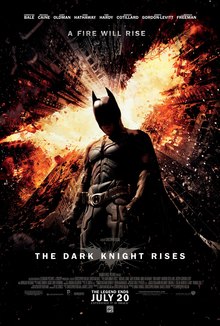 I went to see 'The Dark Knight Rises' after my friends had invited me to a trip to the cinema and decided to join them, but I'd already seen the trailer on TV and thought that it'd looked pretty good, anyway, as I enjoy action films in general.
Having not seen any of the other Batman films, I was a bit anxious as to whether I would be able to see 'The Dark Knight Rises' without getting confused, however.
I needn't have worried, though, as I understood most of it perfectly well and found the film very enjoyable.
I have no other portrayal to go on, but I felt that Christian Bale's performance as Batman was extremely refreshing and he seemed to be perfect for the role.
A new addition to the Batman legend was Catwoman, played by Anne Hathaway, and I thought that there was no one better for this role, either.
The storyline focused around Bane, Batman's nemesis throughout the film, and how he came to be. There was a slight twist at the end, also, concerning his mother, which I felt was very well thought out and unexpected.
8 years since Batman vanished into the night, after taking the blame for the death of D.A. Harvey Dent, Bruce decides that he must reunite Batman with the world, as the masked terrorist, Bane, must be stopped before he destroys Gotham City once and for all. Selina Kyle (Catwoman) is up to something mysterious, too, and needs to be put into place, also.
I was a little confused as to why Batman decided to take the fall for this 'Harvey Dent' character, as I hadn't seen the previous film, but this was down to my ignorance and not the film makers themselves, and so I cannot fault the epic conclusion to the Batman trilogy that is 'The Dark Knight Rises'.
There was plenty of amazing action scenes and everything was very dramatic and thrilling, which had you constantly on the edge of your seat, but, to my surprise, there was a romantic side to film, also, much like Spider-Man.
The movie includes everything you could possibly want to see!

As a lover of Disney, as soon as I was made aware that 'Brave' was coming out, I knew that I had to go and see it.
The story is set in the heart of Scotland, and the main character, Merida, is a fiery red-head with an even stronger personality. Because of this, I thought 'Brave' looked a bit different to most of Disney's previous films, but I knew that it would still have a magical quality to it, and so I went to check it out!
The story is based around the idea that you can 'change your fate', that nothing is ever fixed and you can be whoever you want to be, which I thought was very refreshing and inspiring.
Merida is the daughter of the King and Queen of Scotland and is told that she must marry very soon, so as to rule the kingdom properly, after her mother informs her of a legend about a prince who let his own kingdom go to waste.
But Merida doesn't want to marry someone she is not in love with and will not be forced into anything. Instead, she likes to spend her days riding through the forest on her horse with her bow and arrow, whilst ignoring all of her responsibilities.
She is not the type of princess Disney has previously shown in their other films, and I especially liked this about her.
Cleverly, but also stubbornly, she decides to compete for her own hand, and then an argument between her and her mother ends in a tear in the family tapestry, as well as their relationship.
She flees into the forest and stumbles upon a witch, who's magic ends up almost breaking her family down, instead of only changing her mother's mind, like she'd intended.
After many obstacles are thrown their way, including numerous grizzly bears and overcoming a strong sense of pride, Merida and her family finally see eye to eye and all is well in the kingdom.
'Brave' is an extremely heart-warming story, original in its content, but exactly what you would expect from Disney's marvelous film makers, all the while.
I loved the twist it brought to the classic fairy-tale stories already out there, and I think people of all ages would enjoy this brilliant tale.
Subscribe to:
Posts (Atom)